Vendor lock-in by accident.
Eddyfi, Corestar, Rohmann — each ships its own software, each speaks its own file format. Inspectors retrain every time the customer changes the device.
Live Eddy-Current Acquisition · Native Windows
virtualView captures every sample from your eddy-current instrument and routes it straight into the virtualTube workflow — calibration, inspection, documentation.
Multi-vendor ECT acquisition with live classification, depth regression and multi-channel verification — built for the rig, not the meeting room.
The Problem
Eddyfi, Corestar, Rohmann — each ships its own software, each speaks its own file format. Inspectors retrain every time the customer changes the device.
Today's calibration is gone tomorrow. A defect call from 2023 can't be replayed because the gain settings are buried in a vendor blob.
Was that signal a defect, a baffle, or a probe drifting? Every event is a manual judgement on a small screen at the rig. No second opinion.
How it works
One cockpit for Eddyfi Ectane2, Corestar OMNI-200 and Rohmann PL/B-series. Switch instruments, keep the workflow.
Guided wizard pulls from a catalog of 45 standards and 426 reference defects. No ad-hoc gain hunting in the field.
Live stripchart, live impedance plane, live classification. Every event tagged with category, depth and verification status as it streams.
Write directly into the same SQLite project schema virtualTube reads from. Field-to-report is one step, not three.
Features
Everything you need to acquire, calibrate, classify and verify eddy-current data on the rig — and hand it off to the office without a re-import in between.
Connect Eddyfi Ectane2, Corestar OMNI-200, Rohmann PL340/B300 and EddyVision from one cockpit — switch instrument, keep workflow.
Watch the signal grow as the probe travels. Multi-trace, multi-channel, zero perceivable latency.
Classic Lissajous view with real-time cursor — exactly the picture inspectors already trust, just faster.
Run every probe slot in parallel. Bobbin, RPC/RFT, array, rotating — the topology is built into the data model.
Each event is classified into Pitting, Vibration, Erosion or Unknown — orthogonal axis, trained on real tube material.
Phase-to-depth modeling per category — not a lookup table, a category-aware regressor.
A defect that shows on one frequency but not the other is a baffle, not a flaw. virtualView confirms or rejects every event across frequencies.
Geometry-aware filtering separates support-plate signatures from real defects before classification even starts.
Step-by-step guided calibration with a catalog of 45 standards and 426 reference defects — no ad-hoc gain hunting.
Inspect a tube again from your desk — own ECT file format, zlib-compressed, 50–80% smaller than ECD, no signal loss.
Drift, saturation, noise — the probe's vital signs, watched continuously so you don't trust a dying sensor.
Every confirmed call becomes training data — multi-channel signatures, auto-published to a global database for the next inspection.
Live Pipeline
virtualView is not a black box. Each event walks through eight named stages, and each stage can be inspected, replayed or overridden by the inspector.
Streaming I/Q samples from the instrument.
Phase, amplitude, frequency-correlation per channel.
Tubesheet, baffles and known reference defects.
Geometry filter to drop baffle signatures.
Category prediction: Pitting · Vibration · Erosion · Unknown.
Category-aware phase-to-depth model.
Multi-channel cross-check confirms or rejects.
Per-event call with category, depth, confidence.
Use Cases
Field-tested with inspectors and asset owners across the Middle East refining, petrochemical and power industry.
Problem
Refinery turnaround, OMNI-200 in hand, 200 tubes to clear before lunch. Every minute of vendor-UI fumbling is a tube you don't inspect.
Solution
virtualView connects in seconds, loads last-campaign calibration, shows the same stripchart your inspectors already know. Live classification flags candidates as you stream. Project file lands on disk before you walk off the rig.
Problem
Ectane2 for petrochemical, Rohmann PL340 for power-plant — two trainings, two UIs, two filing systems, two report templates.
Solution
One application, one workflow. Vendor abstraction hides the hardware differences. The same calibration wizard, the same classification, the same project schema regardless of the probe in your hand.
Problem
Mid-tube, the signal looks strange. Defect? Vibration? Probe drift? The inspector has seconds, not minutes, to decide.
Solution
Probe Health Monitor flags drift before it eats your campaign. Multi-Channel Verification rejects baffle signatures live. The inspector pulls the probe back with reason, not guesswork.
Problem
A junior inspector needs to learn the difference between pitting and a baffle — and the heat exchanger isn't in the classroom.
Solution
ECT-format replay reproduces the campaign as if live — same stripchart, same cursor, same classifier output. The training database grows tube by tube, signature by signature.
Problem
After the field: transfer, re-import, re-analyse, format the report — the customer expects it Monday morning.
Solution
virtualView writes directly into the same SQLite project schema as virtualTube. Field to report is one step. Calibration, history and training data carry over — no rebuild.
Hardware Support
Native acquisition for major vendors. New devices integrate as clean extensions — same calibration wizard, same classifier, same project file.
Trained on Real Tube Material
Every classifier output is one of these four — trained on real tube material across carbon steel, copper-nickel, titanium and stainless. No 'flaw vs. not-flaw' binary.
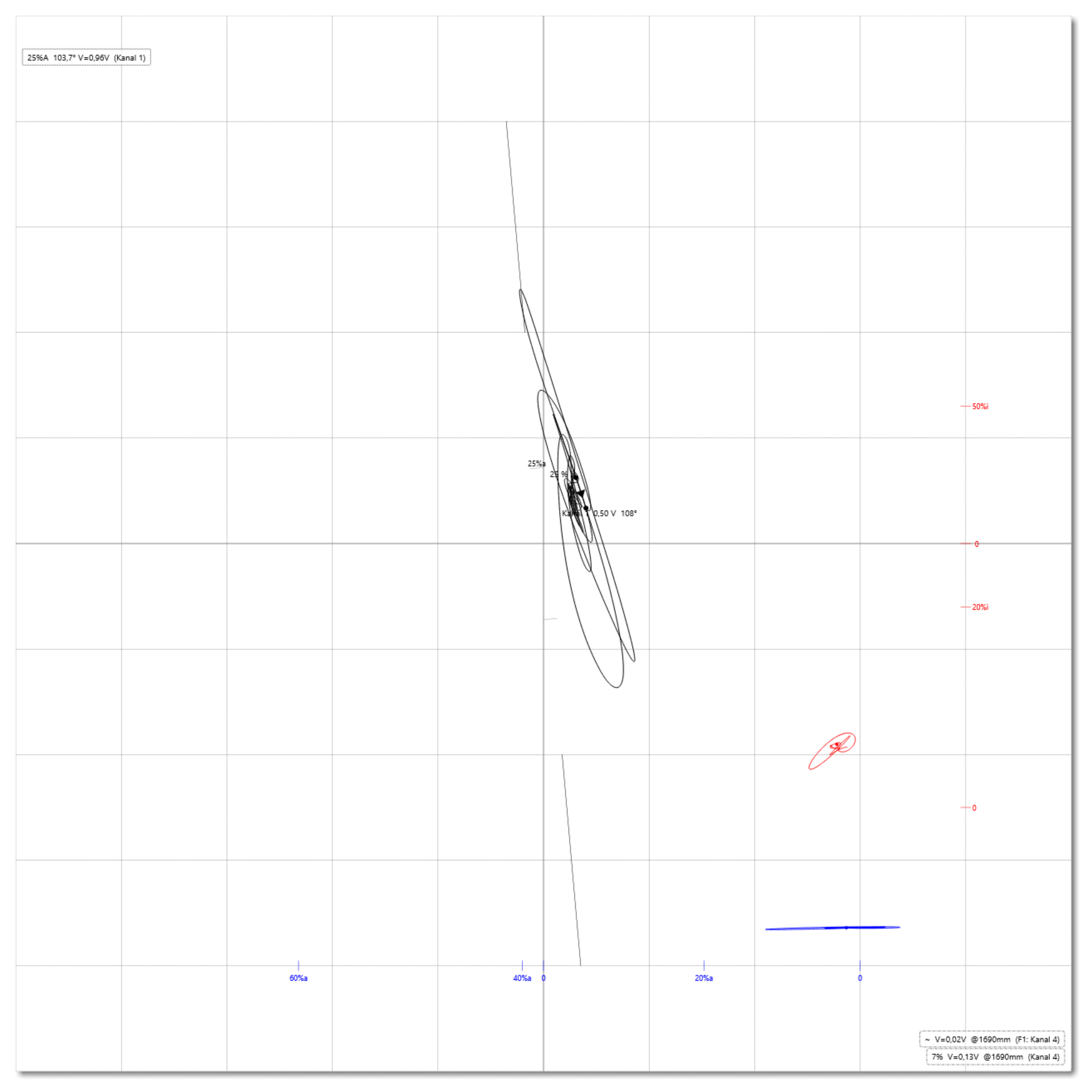
Localised wall loss. Sharp phase signature, depth-correlated amplitude.
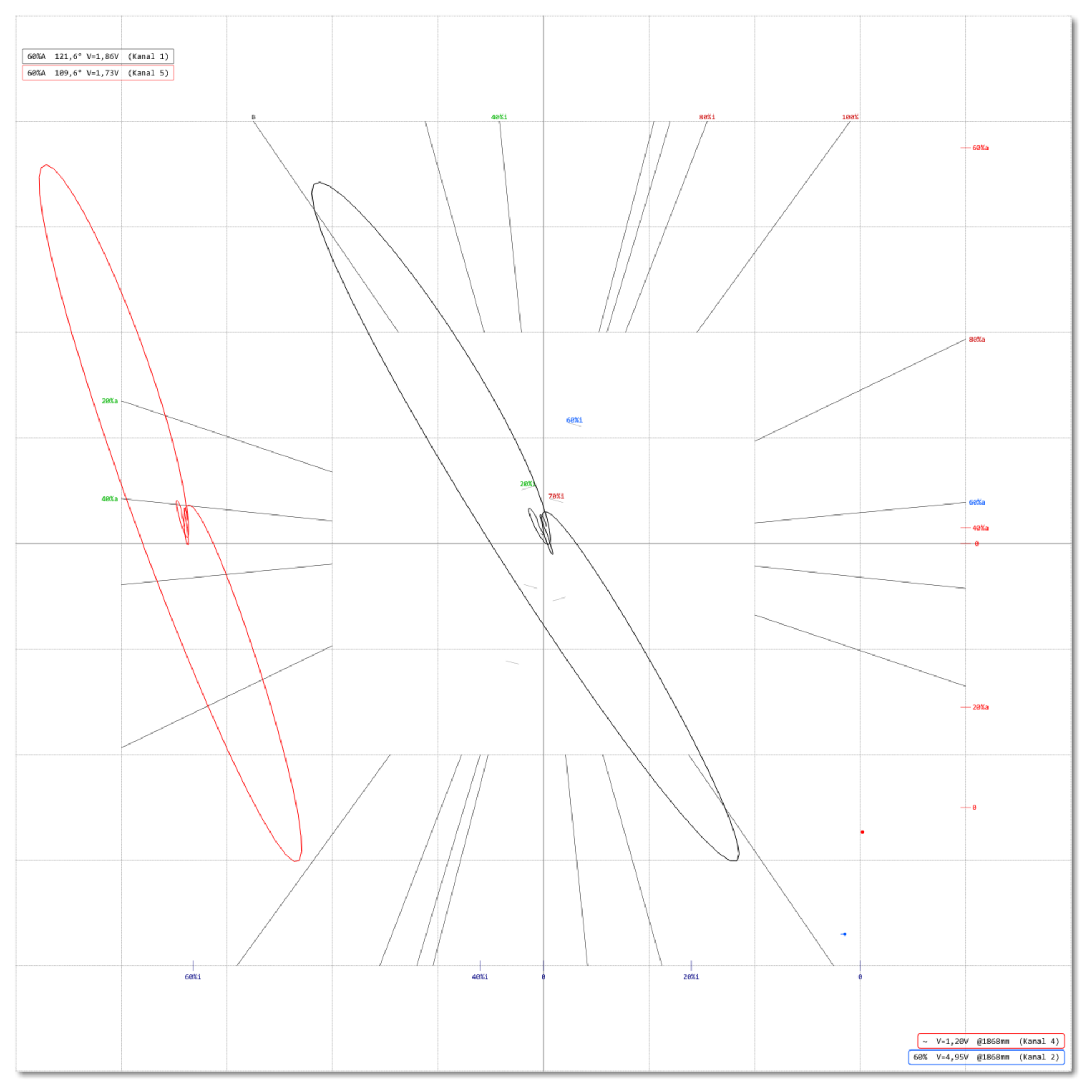
Tube vibration against support plates. Periodic signature, geometry-anchored.
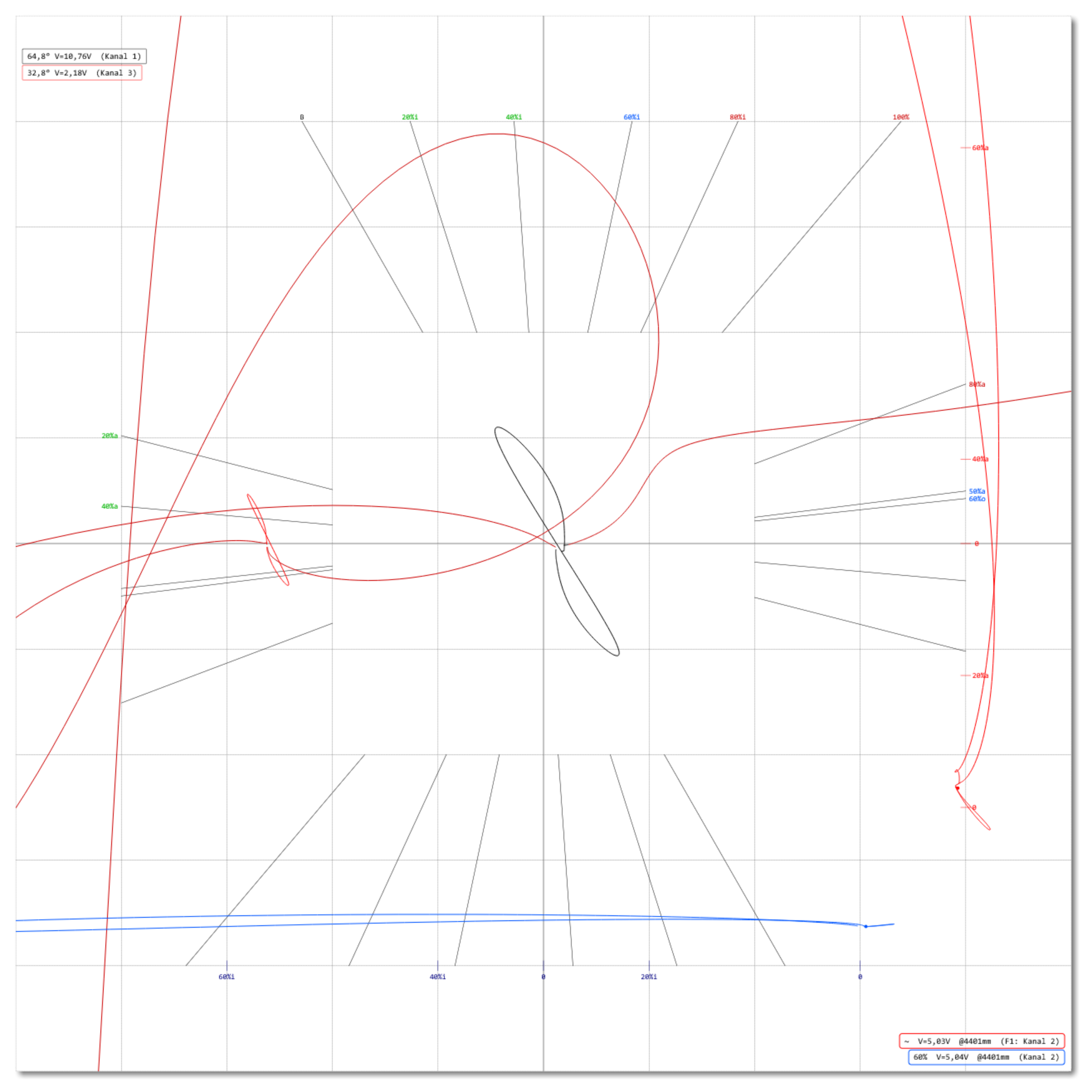
Distributed wall loss along a tube section. Soft phase profile, broad amplitude.
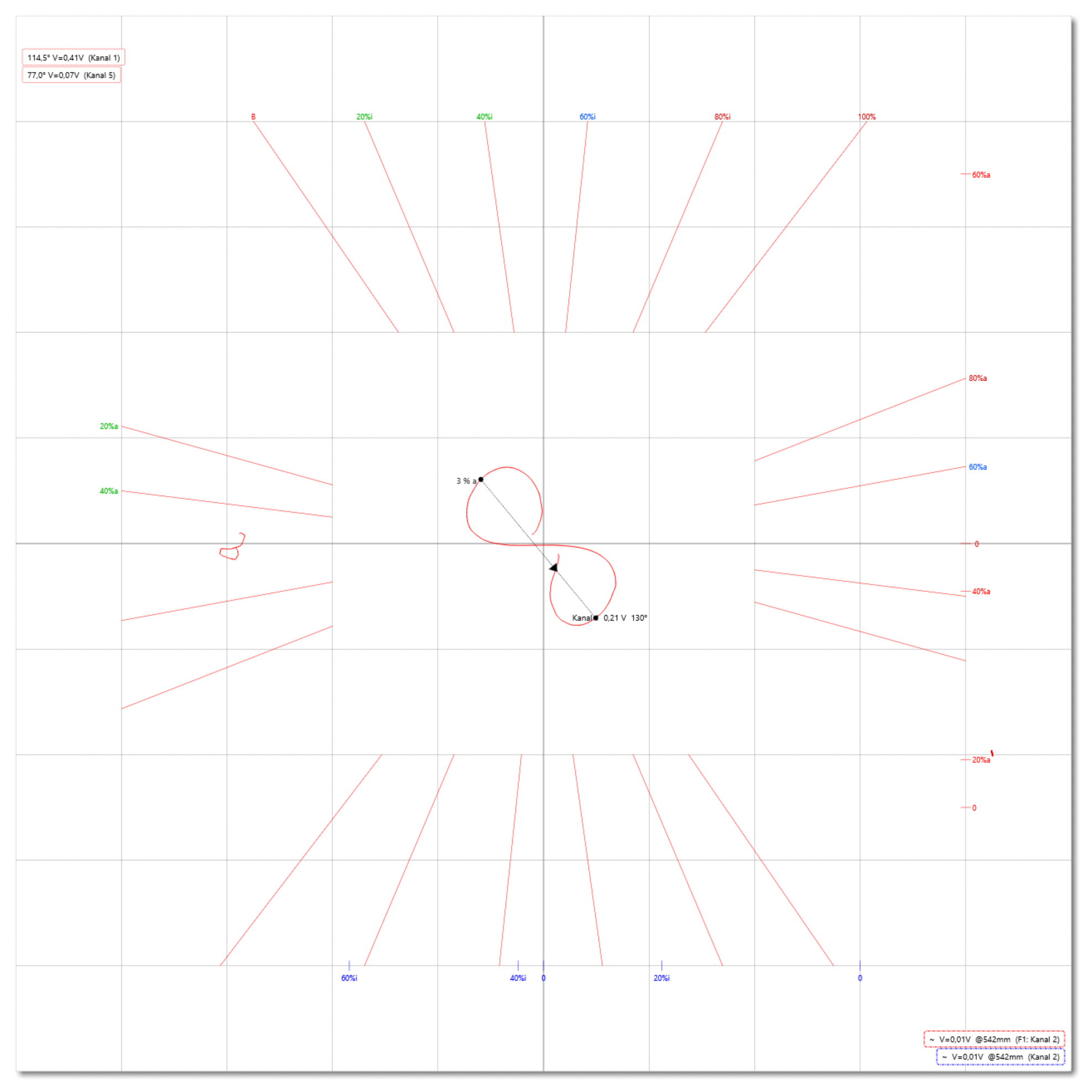
Support-plate signature. Loop-Shape Gate drops these before classification.
Field to Boardroom
virtualView captures every sample on the rig. virtualTube turns those samples into reports your customer signs. Same project file, same calibration history, same training database. Two applications, one workflow.

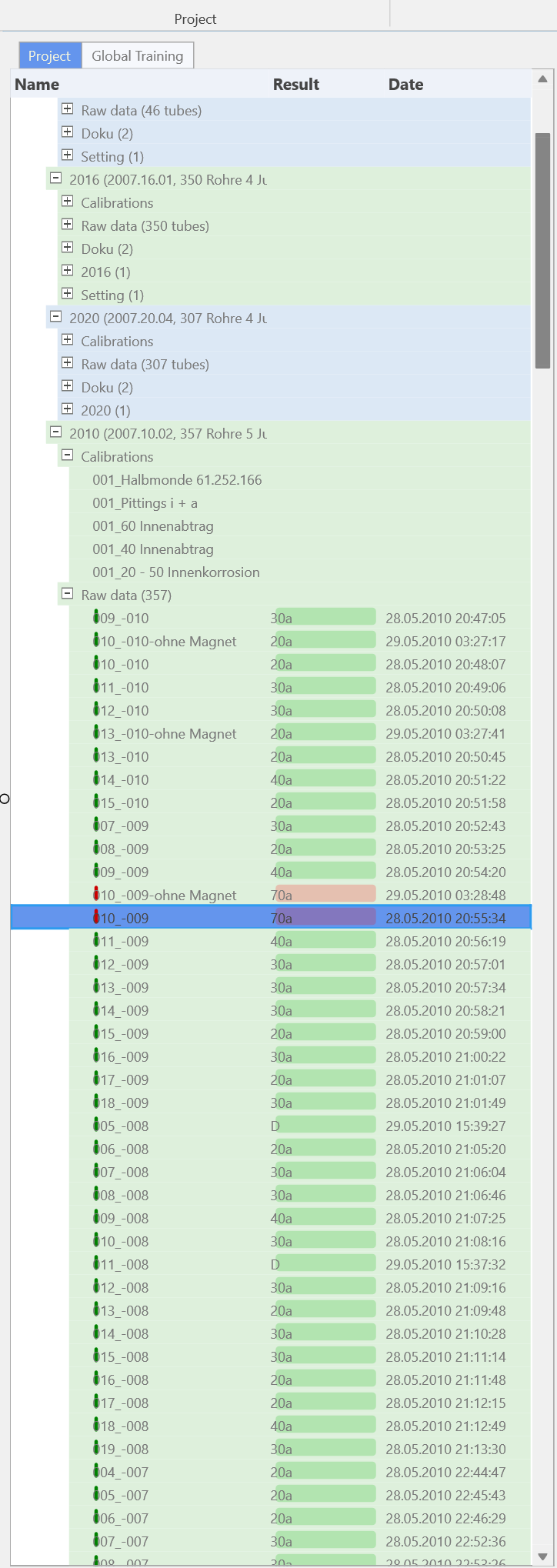
One Probe. One Project. Two Apps.
See virtualtube.appArchitecture
Three principles that drive every design decision in virtualView.
Direct hardware control. Microsecond-level sample handling. No browser, no Electron, no SPA pretending to be acquisition software.
Built on the same ndtssComponents and virtualTube Foundation layers as virtualTube. New instruments add as drivers — not rewrites.
Writes into the same SQLite project file virtualTube reads from. Calibration, history, training — one schema across both applications.
Layers
About
virtualView is built and maintained by Delta Test Middle East LLC — an NDT engineering company based in Riyadh, Saudi Arabia. We use this software daily for heat-exchanger inspections across the Middle East refining and petrochemical industry.
deltatestme.comContact
Demo requests, pilot projects, hardware integration questions — write us. We answer with an engineer, not a sales rep.